SEO and Google visibility
Technical SEO, structured data, Merchant Center and Search Console, so the right people find you on Google.

SEO services are the work that gets your site found on Google for the searches your customers actually type. We audit the site, fix what we find in the code and track the result in Search Console. We don't promise rankings, and Google itself warns against anyone who does.
Who needs SEO services?
- Teams publishing content that earns no clicks
- Sites that feel fast but score slow in Google's eyes
- Multilingual sites whose language versions compete with each other
- Businesses about to change platforms and afraid of losing years of rankings
- Companies that describe their product in their own words rather than their customers'
- Sites whose Google traffic dropped suddenly for no clear reason
Not everyone does. If you run a small local business, you can probably do much of the work yourself, and Google's own guide says so. If your site doesn't show up on Google at all, start with our note on why a site doesn't appear on Google. Sometimes the cause is a single setting left behind at launch.
A score of 100, and no clicks
On our own blog we applied SEO by the book: heading structure, rich results, internal links, image alt text. The audit tool's score reached 100; organic clicks did not come. What earned the most clicks was a small customer tracking tool we had built for our own use.
The lesson shapes all our SEO work: a score is a measure, not a goal. What ranks is a page that is useful to the person searching. Technical SEO makes sure that page is found; it does not make it valuable on its own. The personal news and blog website case continues this story.
Which word do your customers search with?
At an industrial blade company we looked at Search Console data. The company introduced itself as a maker of "industrial cutters"; customers typed "industrial blades" into Google. When the pages moved to the customers' word, clicks went up. No new campaign or redesign was needed, just the right word. Read the case study.
Every SEO project starts there: first what your customers actually type, then what Google shows for it and what people click.
Local search: a page for every studio
For a tango teacher in Istanbul, instead of a single "classes" page, every studio got a page of its own: Kadıköy, Beyoğlu, Silivri. Each one answers the person searching for tango classes in that neighborhood. The personal service website case.
What do we look at in ecommerce SEO?
In an online store, most of the SEO weight sits on product and category pages. In our experience, what sells is usually a product page written in the customer's words.
- Product pages. How the product is used and the questions people ask most, instead of the manufacturer's copy. Structured data that shows price and stock in the search result. More in our note on getting products to show up on Google.
- Category and filter pages. Which filters deserve a page of their own, and which should stay out of the index?
- Out-of-stock products. Removing the page removes its place on Google too. We wrote up how to show out-of-stock products separately.
- Merchant Center. A product feed so your products appear in Google's shopping results. We also do Merchant Center setup as a job of its own.
What an audit covers
- Crawling and indexing. Can Google see your pages, which has it indexed, and why did it skip the others?
- Titles and descriptions. Does each title carry the searched word and the page's promise? If Google rewrites your titles, why?
- Structured data. Product, organization, person, breadcrumb and video markup, matched to the rich results Google still shows.
- Speed. Core Web Vitals from real-user data; is the slowness from images, fonts or scripts?
- Languages. Are hreflang links reciprocal, and does each language show up in its own search results?
- Content plan. Which questions does your site not answer yet, and who can write those answers from experience?
- AI bots. Is your robots.txt blocking the bots of tools like ChatGPT and Perplexity by mistake? Details in our note on AI bots and robots.txt.
How does the work run, and what sets the timeline?
- Access. Search Console, Analytics and the site's code or admin panel. Google advises giving an SEO only read access to Search Console at first, and that is how we start. The accounts stay yours.
- Data. Which searches do you appear in, and which ones get clicks? Search Console keeps old data only for a limited time, so we set up long-term storage first. If traffic dropped, we first separate an update from a tracking error.
- Audit. Every finding comes with its impact and its effort. Small effort, big change goes first.
- Fixes. They go into the code, or to your team as clear tasks.
- Tracking. Clicks and positions of the changed pages are followed in Search Console.
The timeline depends on the size of the site, who applies the fixes and whether the content is ready. In a store with thousands of products, templates and category structure have to be checked one by one. If the code is with another team, the work moves on their schedule. The longest wait is usually new content, because the knowledge has to come from someone inside the business.
A monthly report, or the actual fixes?
The fixes. Audit reports tend to sit in a folder. We fix what we find in the code. If your site is with another team, we write the fixes so clearly that they can apply them without asking.
There is a monthly summary too, but it isn't a scorecard. It says what changed, why it changed and how it showed up in Search Console clicks. Google also says you should expect an SEO to explain every change they make to your site and the reasoning behind it.
This site is built the same way: two languages and structured data on every page. The structured data is checked automatically before every release. If a page has an error, the site does not go live.
What you get
- Prioritized findings: what to fix and why
- Fixes applied in the code, or clear tasks for your team
- Page titles and descriptions
- Structured data and sitemaps
- A content plan based on search data
- A monthly summary of what changed and why
What sets the price of SEO services?
Not a package name, but the list of things to do. That list comes out of the audit.
- Size of the site. Number of pages, category structure, number of languages.
- Kind of problem. A forgotten noindex tag is a one-line fix. Rebuilding the URL structure or reworking templates for speed is a big job.
- Who applies the code. If we apply it, that work is part of the job. On hosted platforms like ikas or Shopify, some settings can only change as far as the platform allows.
- Content. How many new pages are needed and who writes them.
- Migration. If the platform is changing, redirecting old URLs one by one is work of its own. We explain why in our note on changing ecommerce platforms and SEO.
- Ongoing or one-off. A one-time fix and monthly tracking are different workloads.
Sometimes the most effective fix is a single line. Then we don't propose a long engagement. We tell you.
How long does SEO take to show results?
There is no single answer. For a change to show up, Google has to recrawl the page, index it and rank it again. Google gives no fixed time for these steps. Removing a technical block and earning a place with new content don't move at the same speed either. If the search has strong competitors, climbing takes longer.
Google's guide suggests asking an SEO what results they expect and in what timeframe. We answer that question after we have looked at your site's data.
Do you guarantee rankings?
No. Google's own guide says no one can guarantee a #1 ranking on Google. It also warns against SEOs who claim a guarantee or a "special relationship" with Google, and against firms that email you out of the blue. Rankings are decided by Google's systems. What we can promise is the work itself: we explain what we change and why, and we show the result in Search Console data. We put everything it takes to reach the top of Google on a single map.
Who writes the content?
The knowledge comes from you, the structure from us. You know your product and your customers' questions best. Google's helpful content guide also looks for the experience of someone who has actually used the product. We find which questions your site leaves unanswered and lay out the page. Your team writes the text, or we talk it through with you and write it up.
Writing with AI is not a problem in itself. What counts is what the text gives the reader. Publishing hundreds of thin pages at once, on the other hand, can do harm. We covered both in our notes on AI-written product descriptions and publishing too many pages.
Do you work on local search and Google Maps too?
Yes. Google Business Profile is how you show up on Maps and in local results. We also do Business Profile setup and management as a job of its own. A profile needs an address customers can visit or a service that travels to customers. If you only sell online, we tell you that up front.
Google ranks local results mainly on relevance, distance and prominence. It also states plainly that there is no way to request or pay for a better local ranking.
Services in this area
Notes on the subject

Should AI bots read my site? What to allow and block for ChatGPT, Perplexity and Claude in robots.txt
For most businesses, yes. Training bots and answer bots differ. Which to allow, which to block, a sample robots.txt and what to do about bots that ignore it.
· 6 min read
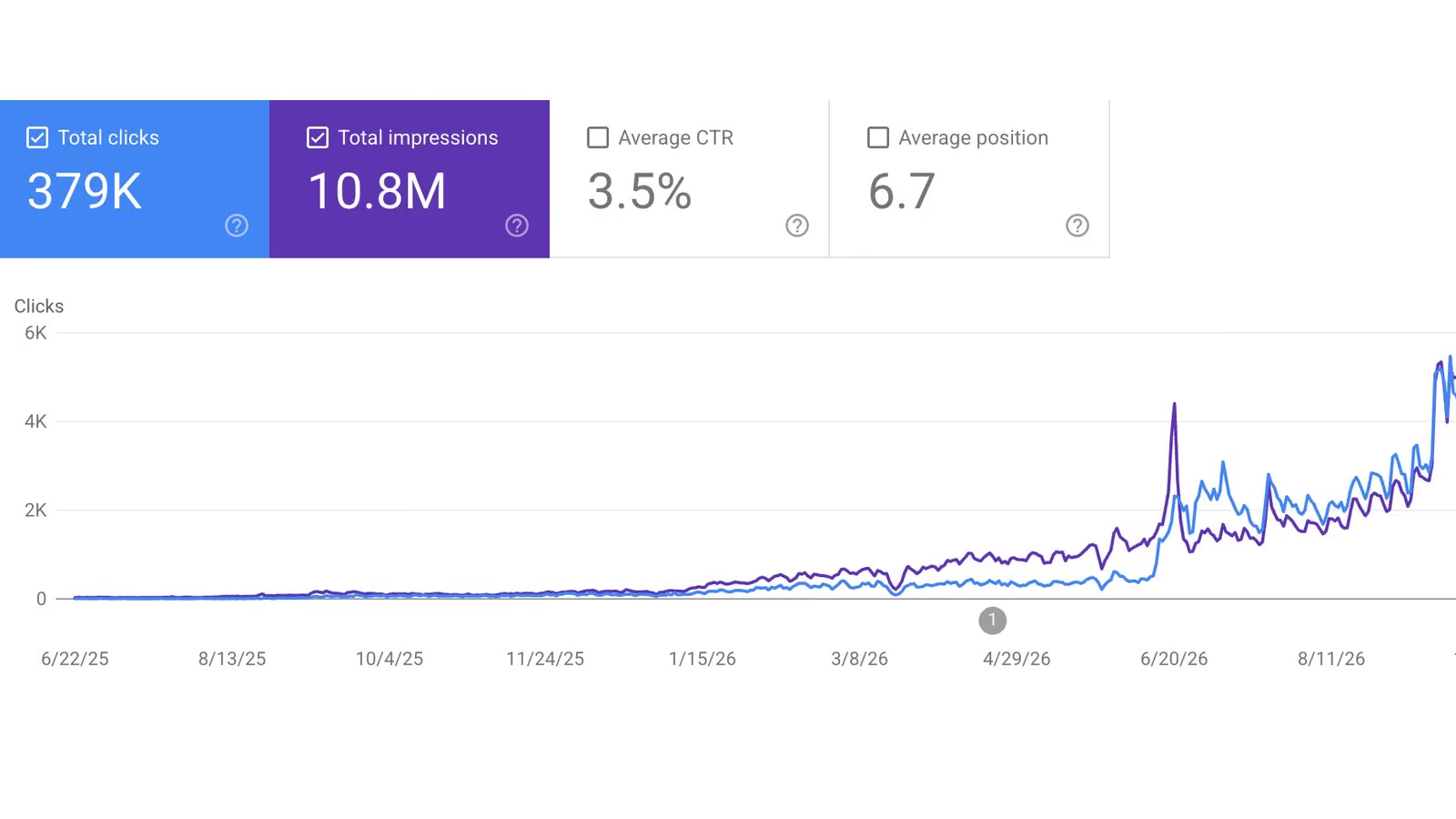
How many months of data does Search Console keep? Can you get 5 years of clicks?
Search Console keeps the last 16 months, and older data is gone at Google too. For the long run, you store it yourself from today. Here's how.
· 5 min read
My Google traffic dropped: is it an update or a tracking error?
When traffic drops, eliminate before you panic. How to tell a technical error, a Google update, seasonality, a tracking problem and AI answers apart.
· 4 min read

How do I track visits from ChatGPT and Gemini?
Measure AI traffic by the referring site, not by UTM tags. Why Gemini's tags vanished, what Analytics can see and what it cannot.
· 3 min read
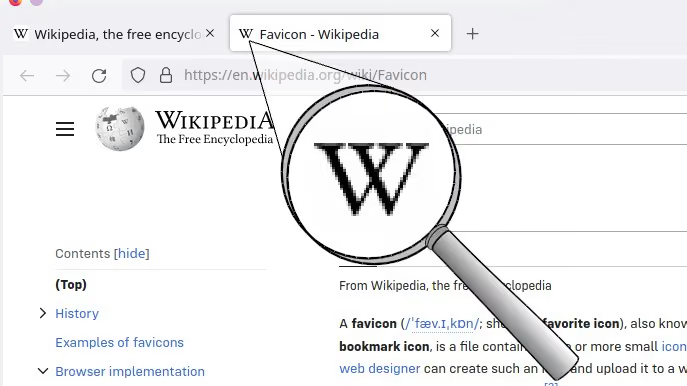
Why is my site's icon not showing in Google?
A grey globe instead of your logo in search results? Google's favicon rules, the common mistakes and a one-minute check you can run yourself.
· 3 min read
Should I opt my site out of Google's AI answers?
A new Search Console setting removes your site from AI Overviews and AI Mode. What it does, what it does not do, and why most businesses should leave it on.
· 4 min read

Does semantic HTML improve your Google rankings?
According to Google's own documents, semantic HTML does not raise rankings directly. Its real value is accessibility and maintenance, and here is why.
· 5 min read

How do I speed up my website? Images, JavaScript, caching and prefetching
To speed up a website, measure Core Web Vitals with real visitor data first, then fix images, JavaScript, plugins and caching in that order.
· 5 min read
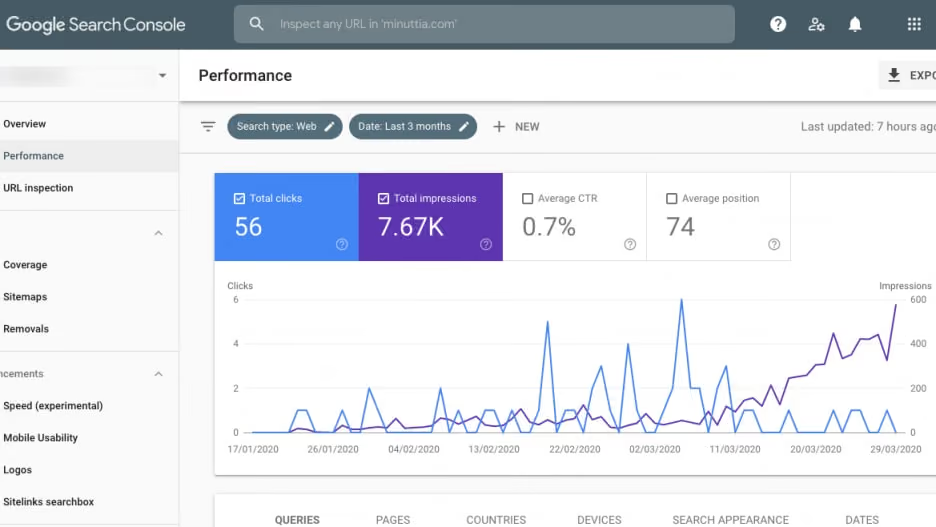
Can publishing too many pages sink my site on Google?
Is there a hidden Google formula that divides your links by your indexed pages? What the Panda patent actually says and how to grow a large site safely.
· 4 min read

Is Merchant Center approval guaranteed, and when do products show up on Google Shopping?
Merchant Center approval is not guaranteed. How long the review takes, what Google checks on your site and why products may not appear right after approval.
· 3 min read

How should you show an out-of-stock product? Hide it or ask for a quote?
Hiding a product you can still supply costs you its page and its place on Google. How to show one that is out of stock, has no current price or is discontinued.
· 6 min read
How can an online store grow without advertising?
Free visibility on Google, customer reviews, email to people who opted in. Four channels to build before ads, and the İYS rules for email in Turkey.
· 6 min read
How do you get your products to show up on Google?
Product schema, Merchant Center, reviews, price and stock. What it takes for your products to appear in search, Images and Shopping with their price.
· 5 min read

Does changing your ecommerce platform hurt your SEO?
Moving from ikas or Shopify to custom software does not wipe out your place on Google; three migration mistakes can. How to set up 301 redirects.
· 6 min read
Why is my website not showing up on Google?
How long a new site takes to get into Google, which settings hide a page, and why an indexed page may not appear. Find the cause in Search Console.
· 8 min read