How can an online store grow without advertising?
Free visibility on Google, customer reviews, email to people who opted in. Four channels to build before ads, and the İYS rules for email in Turkey.

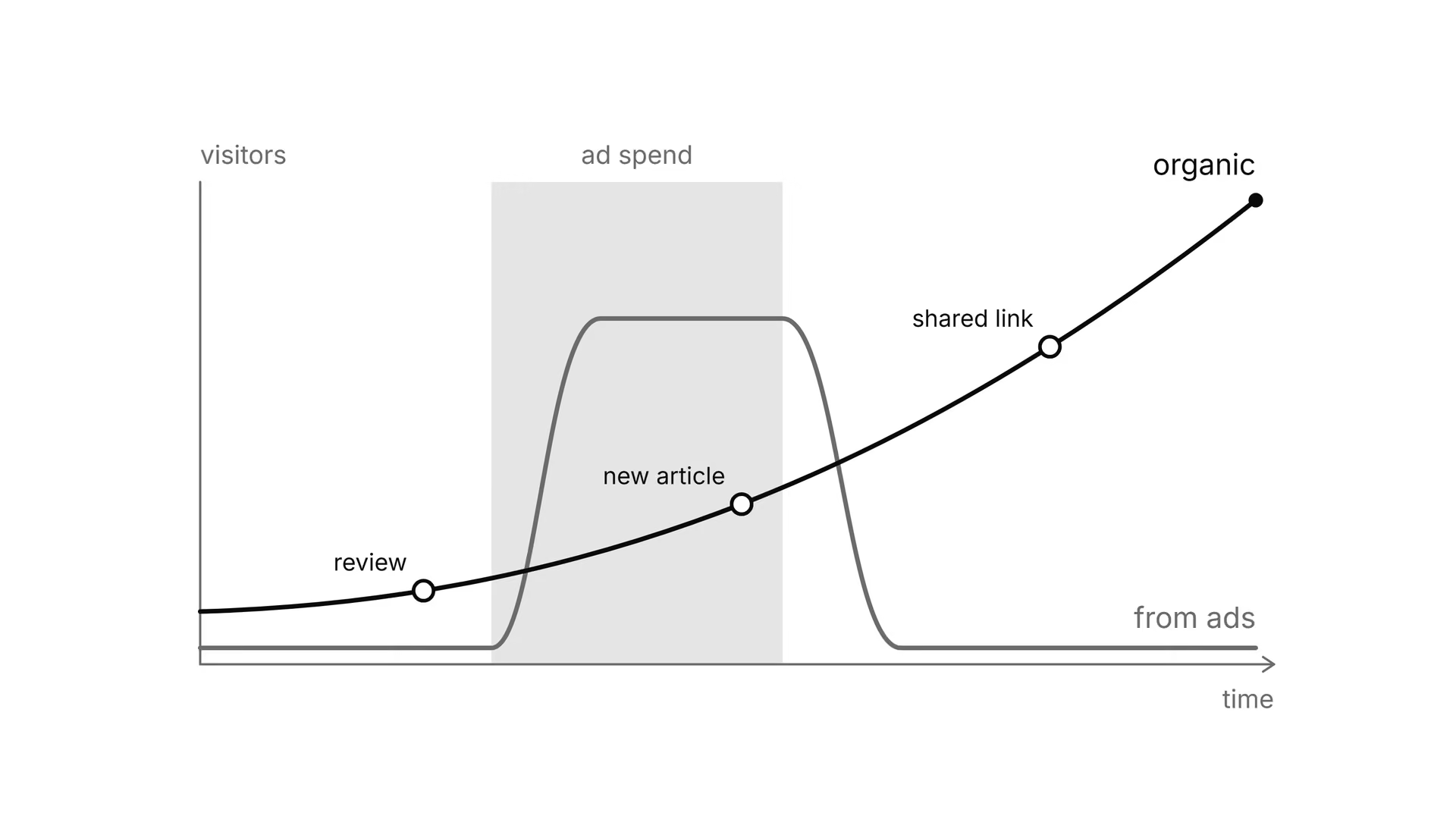
By making more of the visitors who already come and the customers who have already bought. Showing up on Google for free, asking every customer for a review, sharing product links and writing regularly to customers who have opted in are slow jobs, but they accumulate. Ads stop working the day you stop paying for them. That makes advertising the next step, not the first: on a site that holds on to its visitors and has reviews and content built up, every lira spent on ads does more work.
Where can I show up on Google for free?
The first place is search results. How a site gets found on Google, and why it sometimes does not, is in our note on sites that do not appear on Google. We set up the settings and pages a site needs to be found in search as SEO and Google visibility work. The second place is product listings. When you give Merchant Center your product feed, your products can appear in the Shopping tab, in Images and in search without any ads. According to Google's list of countries, free listings are available in Turkey and the Turkish lira is supported; Google does not guarantee that products will be shown. One distinction matters here: in 2020, after a decision by Turkey's Competition Board, Google announced that it was removing paid Shopping ads from search pages in Turkey. Free listings are a separate thing, and they appear as available on the current list. How products stand out there is in our note on getting products to show up on Google.
If you have a shop, a showroom or a service where you go to the customer, the third place is Google Maps. Google Business Profile is for businesses that have an address customers can visit or that travel to their customers. If you only sell online and have no address customers can come to, you cannot open a profile; Google does not accept a rented mailing address either. In that case you collect reviews on your own site, on the product pages.
How do I collect customer reviews?
Reviews do not arrive on their own; you ask for them. If you have a Business Profile, Google gives you a ready-made review link and a QR code: in the profile you choose "Read reviews" and then "Get more reviews" and copy the link, while the QR code can only be downloaded from a desktop browser. Google's advice is to add this link to a receipt, a thank-you email or the end of a chat. The same logic holds for product reviews on your own site: one email on the day the order is delivered, with a single link to the review section of the product page.
Know the rules too, because they are broken often. Under Google's policy, it is forbidden to get reviews written in exchange for money, discounts, or free products or services, and to have a negative review changed or removed. Less well known: sending the review link only to satisfied customers is also forbidden. You send the link to everyone in the same way. An unhappy customer's review, together with your answer to it, tells a new customer a lot about you.
Do social media and sharing help?
They do, though not because they raise your ranking directly but because they bring people to your site. Google's SEO starter guide says that promoting new content on social media, in a community or by word of mouth helps it get discovered faster; it also adds that over-promotion can do harm. So sharing a new product or a new note, or sending a link in answer to a customer's question, works. If you talk to customers on WhatsApp, the WhatsApp Business app is free and lets you show your products as a catalogue.
Can I email and text my customers?
You can, but only after getting their consent. Under Turkey's Law No. 6563, commercial electronic messages, such as campaigns, discounts or new-product announcements, may be sent to a recipient only with their prior consent. Every business that sends these messages has to register with İYS, Turkey's Message Management System for commercial messages, and a recipient whose consent does not show up in İYS cannot be messaged. If you collect consent with your own form, the regulation says it is invalid unless you report it to İYS within three working days; proving that you got the consent is also your job. You cannot ask for consent with a commercial message, that is, by sending a campaign email that says "would you like to get our newsletter?"; according to the Ministry of Trade, consent is collected another way, such as a sign-up form. The recipient can also refuse messages at any time, without giving a reason.
A common mistake is thinking "they bought from us, so we can write to them." The law's exception is narrow: a customer who gave you their contact details themselves does not need to give separate consent for messages about changes to, use of, or care for the product they bought. Order, shipping and payment notifications fall under this too. Sending these notifications by text message, and keeping them apart from campaign messages, is covered on our SMS integration page. But you cannot send that same customer a campaign for a new product without consent. That is why an unticked newsletter consent box on the checkout page, wired into İYS, is one of the small jobs that will pay off most later.
When should I start advertising?
When these channels are set up and working. If product pages answer the visitor's question, reviews have started to build up and you can measure which page brings in sales, the visitors an ad brings are not wasted. When you stop an ad, the visitors stop too; every new article, every new review and every shared link stays and makes the next one easier.