E-invoice, e-archive and e-waybill integration
From order to invoice with nobody touching it: we connect your site or ERP to an integrator authorised by the Turkish Revenue Administration (GİB).

Who it is for
- Businesses issuing invoices by hand from a separate screen, looking at each order
- Sellers who sell both on their own site and on marketplaces and worry about invoicing twice
- Sellers who have to move from paper invoices to e-archive
- Anyone who wants to change integrator, or does not know which one to choose
Three decisions before the connection
Building the connection is the easy part. Three things need to be settled first: which system issues the invoice, which integrator it connects to, and at exactly which moment the invoice is issued. If you have an ERP or also sell on marketplaces, one place should issue the invoice, and that place should be the ERP. When every channel issues its own, the same customer getting two invoices is only a matter of time. We covered these decisions in detail in the note on e-invoice integration.
Live with Luca
On the bearing project, we tied the e-archive invoice to the order through Luca. When an order is confirmed, the document is created by itself and sent to the customer. Luca has no public developer documentation, so having built this connection once in production is what saves the most time on the next project.
Nilvera and other integrators
The practical way to send invoices to GİB from your site or ERP is an integrator authorised by GİB. All of them are on GİB's current list. Odoo's Turkish localisation has official modules for Nilvera, which we configure and test against your chart of accounts and document types. When choosing an integrator, look at the price per document, how clear its documentation for developers is, and whether it offers a test environment before going live.
E-waybill
The e-waybill (e-İrsaliye) is the electronic form of the dispatch note that documents goods leaving your warehouse, and it is sent through the same integrator as the e-invoice. Under GİB's current communiqué, businesses registered for e-invoicing with gross sales of 10 million TL or more must use e-waybills from July of the following year. In some sectors, such as iron and steel, mining and sugar, turnover does not matter. For businesses that must use it, the waybill should be created the moment a shipment is opened and come out together with the shipping label. We build it together with the shipping connection.
What you get
- A one-page decision document on which system issues the invoice, and when
- The connection between your site or ERP and the integrator, with its source code
- A record showing the regular, business and return scenarios were tested in the test environment
- Alerts telling the right person where to look when an invoice cannot be issued
Notes on the subject
Turkish e-invoice credit (kontör) prices in 2026: what are they, and is there a free option?
There is a free option: the Revenue Administration's portals need no credits, but every invoice is typed by hand. What credits count, and how to pick one.
· 6 min read
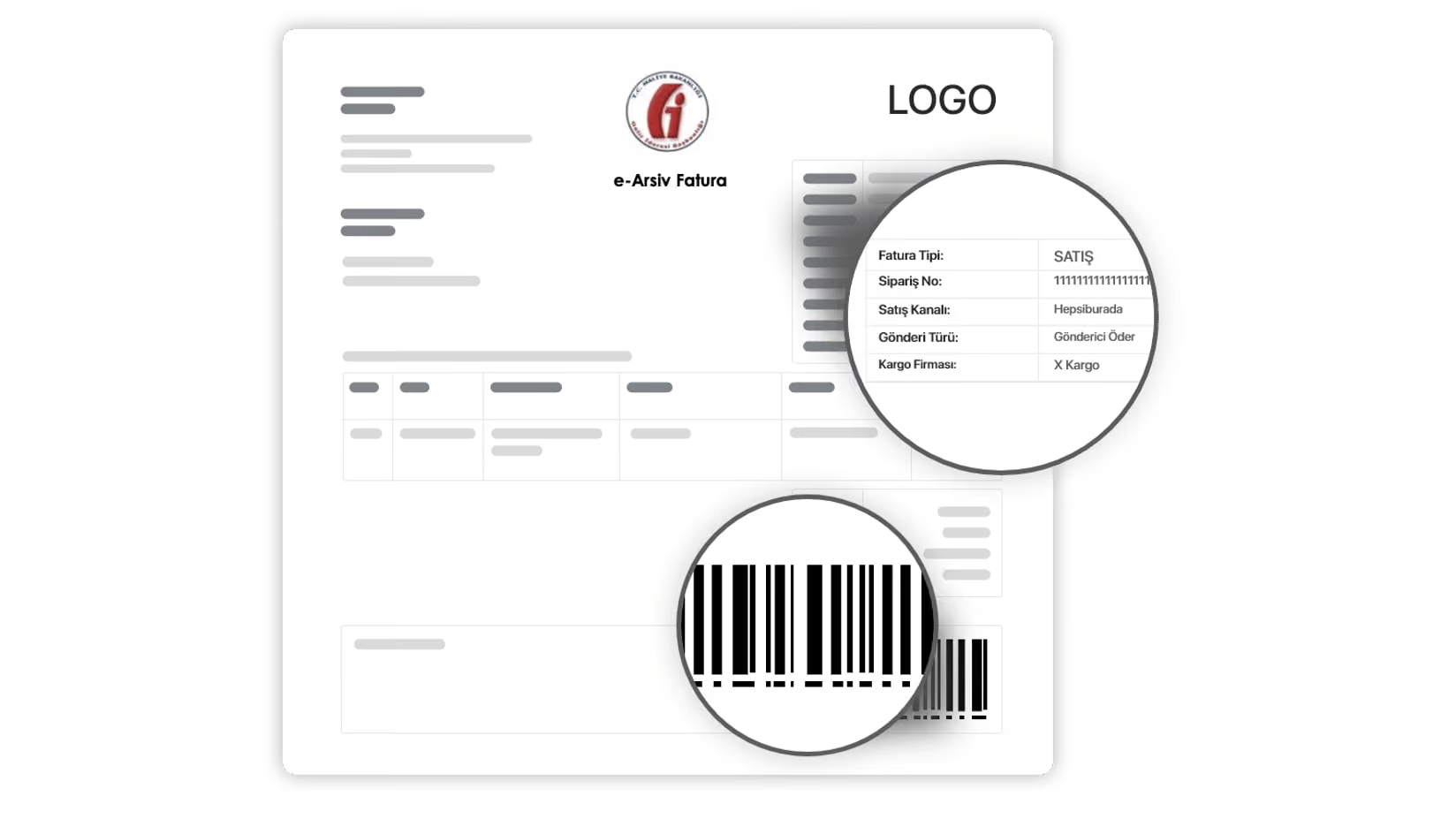
E-archive or e-invoice for online sales in Turkey? Is a national ID number required?
Buyers on the e-invoice system get an e-invoice, anyone else an e-archive invoice. A consumer's national ID number is optional; what if they skip it?
· 6 min read
How do you set up e-invoice integration in Turkey?
The connection is the easy part of e-invoice integration in Turkey. First decide who issues the invoice, what it connects to and what to ask your developer.
· 6 min read