E-archive or e-invoice for online sales in Turkey? Is a national ID number required?
Buyers on the e-invoice system get an e-invoice, anyone else an e-archive invoice. A consumer's national ID number is optional; what if they skip it?

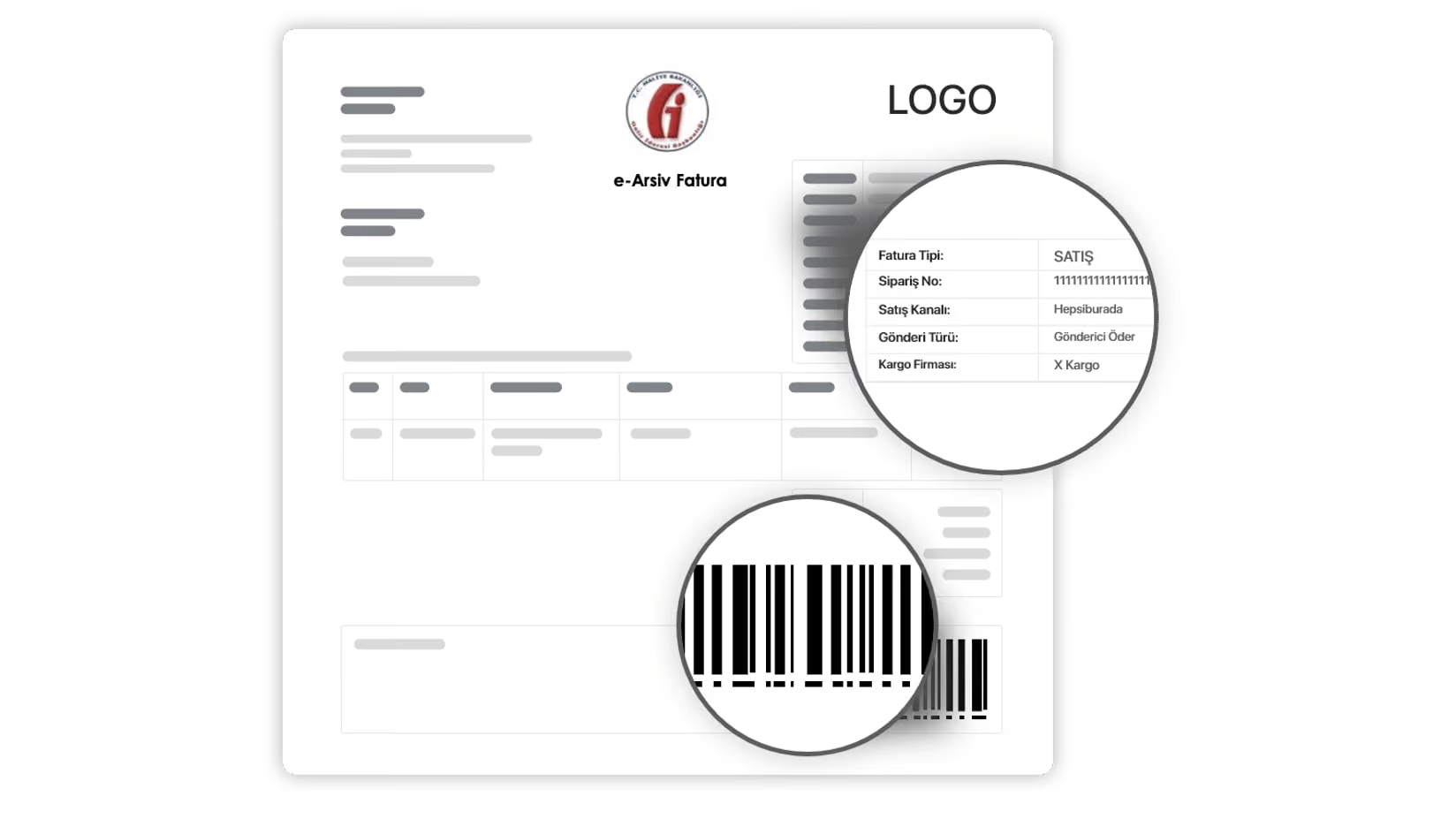
If your buyer is registered in the e-invoice system (e-fatura), you issue an e-invoice; if not, you issue an e-archive invoice (e-arşiv fatura). Most of the invoices an online seller sends to consumers are e-archive for that reason. You do not have to ask a consumer for their Turkish national ID number (TCKN). In the view of the Revenue Administration (GİB), an invoice issued to a final consumer does not have to carry the number, and if the customer does not give it, the field can be filled with 11111111111. The obligation starts when the buyer is a taxpayer.
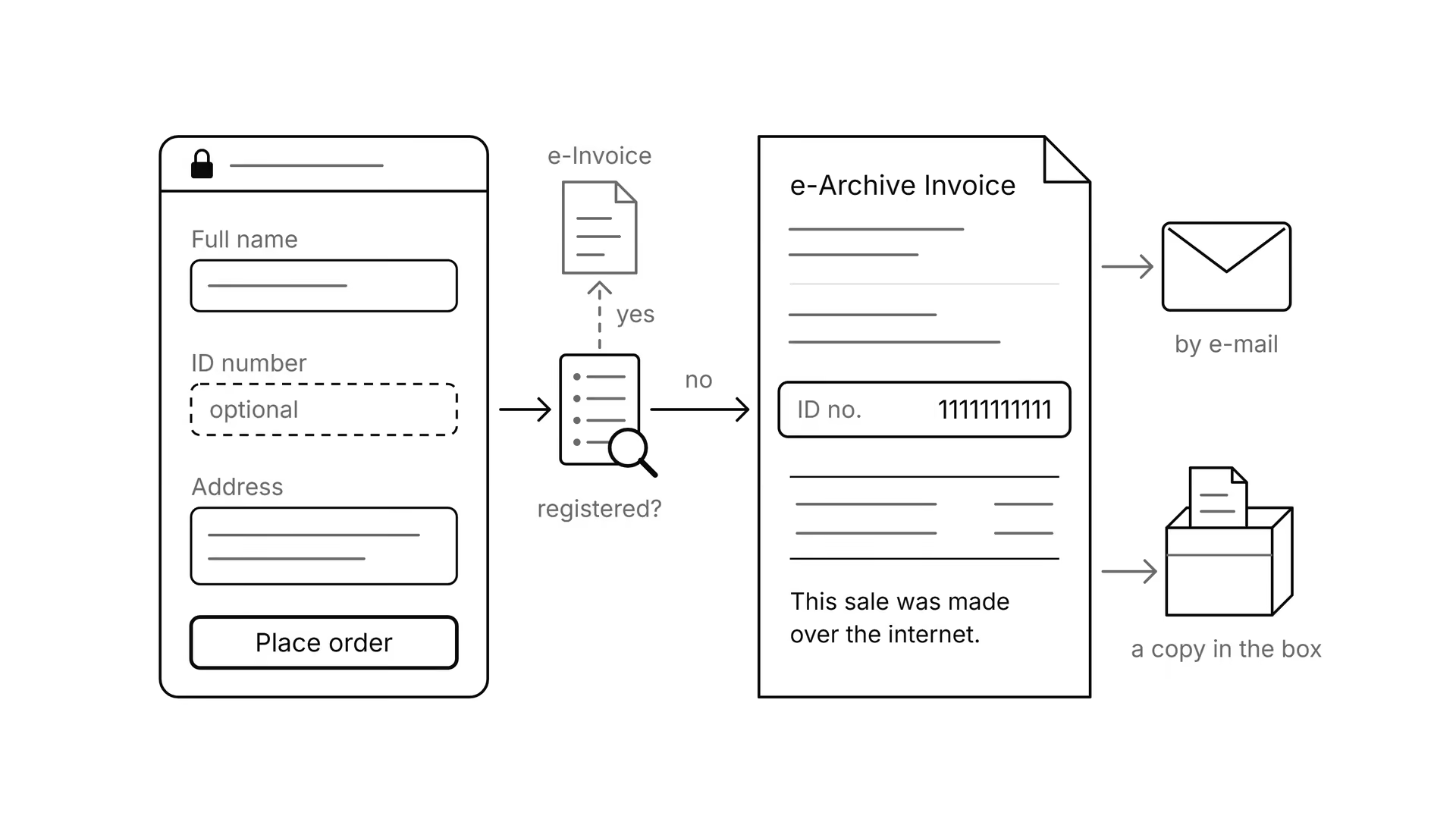
What is the difference between an e-invoice and an e-archive invoice?
Both are electronic invoices; the difference is the buyer. Under General Communiqué No. 509 on the Tax Procedure Law (VUK), a seller registered for e-archive issues an e-invoice to a buyer registered in the e-invoice system and an e-archive invoice to one who is not. To see whether a company or sole proprietorship is registered, look at the list of registered users that GİB publishes. Individual customers are not on that list, so what you issue to them is an e-archive invoice.
The same communiqué says when you have to move to the system, and the threshold is lower for online sellers. A business whose gross sales revenue exceeds 500,000 TL has to move to e-invoice and e-archive by the beginning of the seventh month of the following year; the general threshold is 3 million TL. The paper-invoice era is also ending for taxpayers who are not registered at all. Since 1 January 2026, their invoices have had to be issued as e-archive, whatever the amount, through GİB's portal or a private integrator. For businesses taxed under the simple method or keeping business-account books, that date is 1 January 2027. Disregard articles that describe old limits such as 5,000 and 30,000 TL, which have changed over the years; what applies is the current text of the communiqué.
Do you have to ask a consumer for their national ID number?
No. The communiqué says the buyer's ID number goes on an e-archive invoice "if there is one" (varsa). A tax ruling from the Ankara Tax Office Directorate dated 4 May 2023 also states plainly that there is no obligation to put the national ID number on an invoice issued to a final consumer. If the customer does not give their number, the field can be filled with 11111111111, as in GİB's guide. We also found no basis for the commonly heard rule that the number becomes mandatory above a certain amount; the requirement depends on the buyer, not the amount. If the buyer is a taxpayer, meaning they want the invoice in the name of a company or a sole proprietorship, a tax number or national ID number and the tax office must be entered.
So why do so many online stores make the ID number a required field? Because the technical guide for e-archive requires the identity number field to be filled in for an individual buyer, and the invoicing software passes that on to the customer as a required field. Yet for a customer who leaves it blank, writing 11111111111 is enough. Requiring data the law does not ask for is also a risk under KVKK, Turkey's personal data protection law. In 2022 the Personal Data Protection Board found a shopping site that required the national ID number for membership to be unlawful. The decision was about membership, not invoices, but the logic is the same: Article 5 of the KVKK gives no basis for collecting, as mandatory, data that the law does not expressly provide for.
Our advice is simple. Make the national ID field optional on the checkout page, and have your system write 11111111111 on the invoice if it stays empty. For a customer who says they want a company invoice, open fields for company name, tax number and tax office, and make those required. For an invoice to an individual customer abroad, we found no clear GİB text; talk to your accountant (mali müşavir) about that.
How is an e-archive invoice sent to the customer?
For an online sale you must deliver the e-archive invoice to the customer electronically, mostly by email. The invoice has to carry the statement "Bu satış internet üzerinden yapılmıştır." (This sale was made over the internet.) and a few more details: the web address where the sale was made, the payment method and date, the date the goods were shipped, and the name and tax number of the carrier taking the shipment. The tax number here is the carrier's, not the customer's.
Emailing the invoice does not mean you can send the parcel with nothing in it. According to the communiqué, one of these must travel with the goods: a delivery note (sevk irsaliyesi), a copy of an e-delivery note (e-irsaliye), a paper printout of the e-archive invoice, or a cash-register invoice information slip. The invoice also has a return section. When the customer sends a product back, they print the invoice, fill in this section, sign it and return it with the product; for the seller, this document stands in for an expense voucher (gider pusulası).
When should the invoice be issued?
Under the Tax Procedure Law, an invoice is issued within seven days at the latest from the date the goods are delivered or the service is performed; e-archive has no separate period. There is a deadline for cancelling a wrongly issued invoice too: GİB's e-archive cancellation and objection guide says cancellation must in every case be done within eight days. That is why a connection that issues the invoice automatically along with the order is the easiest way to keep both the deadline and mistakes under control. We build this connection as e-invoice integration work.
We explain how to connect invoicing to your site or ERP, and what to look for when choosing an integrator, in the e-invoice integration note. What we have written here rests on the current text of the communiqué; tax rules change often, so confirm your own situation with your accountant.