How do you set up e-invoice integration in Turkey?
The connection is the easy part of e-invoice integration in Turkey. First decide who issues the invoice, what it connects to and what to ask your developer.


Building the connection is the easy part. The hard part is the three decisions that come before it: which system will issue the invoice, what you will connect that system to, and at exactly which moment the invoice is issued. Go to an integrator or a developer before these are clear, and they will build it the way they understand it. The problem usually shows up months later, as an invoice sent to the wrong person or issued twice.
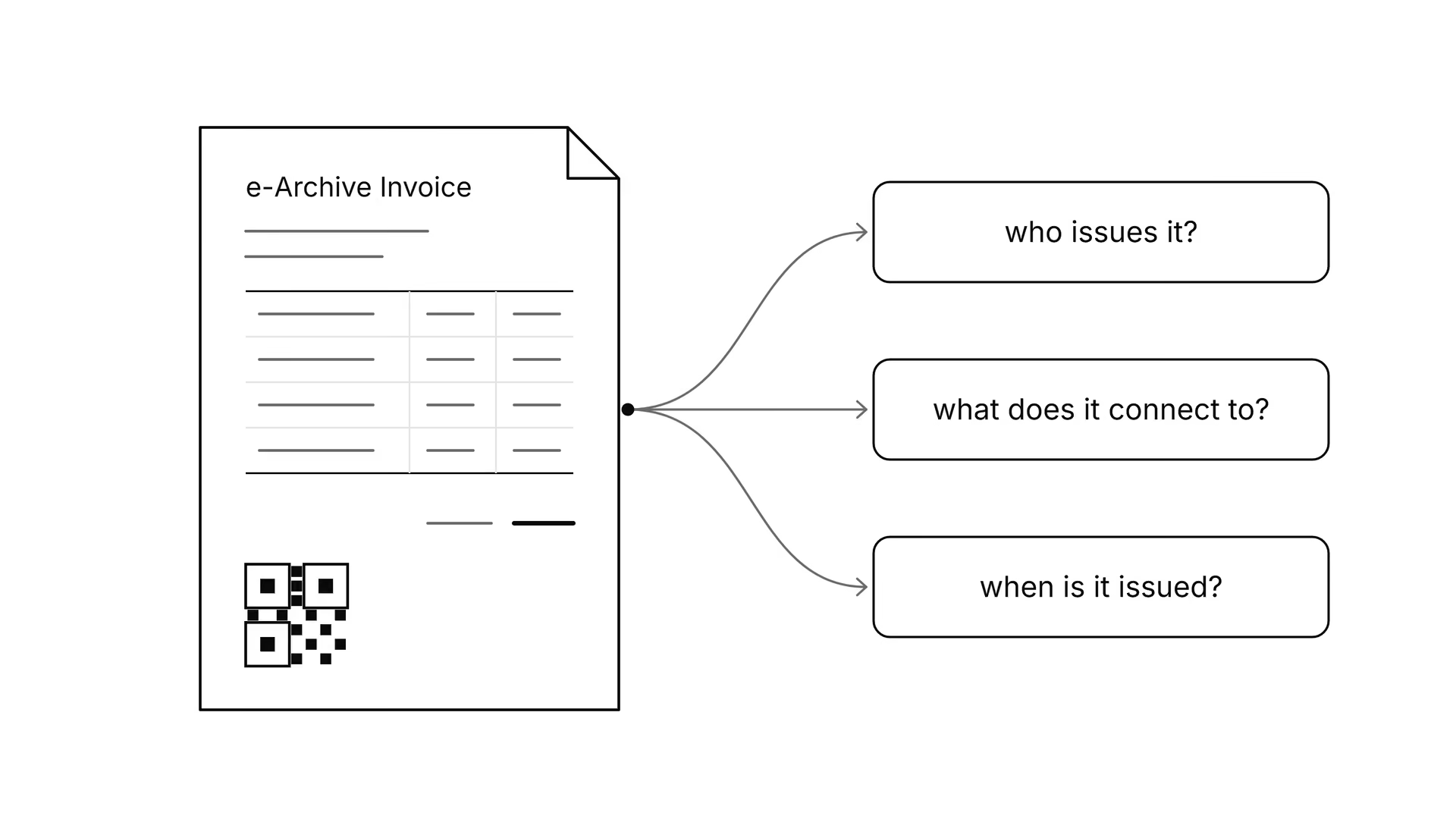
Who will issue the invoice?
In Turkey, e-invoices (e-Fatura) and e-archive invoices (e-Arşiv) have to pass through the system of the Revenue Administration (GİB), and this now concerns almost every seller. Since 1 January 2026, sellers who still issued paper invoices must issue e-archive invoices whatever the amount. For businesses taxed under the simple method or keeping business-account books, the date is 1 January 2027 (GİB's current communiqué, in Turkish).
There are three ways to reach GİB. GİB's own portal is free but manual: you fill in the invoice on screen or upload a file prepared in your own software. GİB offers no public connection that lets your website issue invoices on its own. The second way is connecting your own system to GİB directly, which means meeting the conditions GİB sets on things like document volume and technical infrastructure. For a small or mid-sized business the practical way is the third: a private integrator licensed by GİB. All of them are on GİB's current list. If the buyer's tax or ID number is on GİB's e-invoice list, they get an e-invoice; if not, an e-archive invoice. The integrator runs this check on its own.
The list holds familiar names, and that is where the confusion starts. Nilvera is an integrator in its own right. Mikro and Logo make accounting and ERP software and are integrators themselves, so their users issue invoices straight through them. Luca is the software of TÜRMOB, the union of Turkey's accountants' chambers, which runs its own integrator. Paraşüt, on the other hand, is not an integrator; it offers e-invoicing through an integrator in its group. So the answer to "which integration should I build?" usually starts with your accountant. Whatever software your books are kept in, having invoices land there is the path of least effort.
When choosing, look at three things. First, cost. Integrators usually charge per document, paid through prepaid credit packages ("kontör"). Some also deduct credits for the invoices you receive, so look at both directions when picking a package. Second, how good their documentation for developers (the API) is; companies such as Nilvera publish theirs openly. Third, a test environment: integrators such as Nilvera and Uyumsoft offer a separate one where you can try everything before going live.
What will you connect it to?
There are two different setups, and knowing which one you are in changes everything.
If you have no ERP and your sales come from a single website, you can connect the site straight to an integrator. ikas, Ticimax and IdeaSoft offer this from their own panels; their partner integrators include names such as Paraşüt, EDM, Uyumsoft, Nilvera, QNB eSolutions and Sovos. T-Soft has its own e-invoice app. Shopify has no Turkish e-invoicing out of the box; it connects through apps by Turkish developers, and on WooCommerce you install a plugin. When you connect a pre-accounting tool such as Paraşüt, orders from the site land on its order screen first and are invoiced from there. That setup works like a small ERP.
If you have an ERP, or you sell on marketplaces such as Trendyol as well as on your site, the rule changes: one place should issue invoices, and that place should be the ERP. The site and the marketplaces send their orders to the ERP; the ERP reduces stock, issues the invoice and creates the accounting entry. If every channel issues its own invoices, it is only a matter of time before a customer gets two invoices, stock drops twice or the books do not add up at the end of the month. We build this flow, orders into the ERP and invoices from the ERP to the integrator, as e-invoice integration work.
When should the invoice be issued?
It looks like a simple question, but this is where developers most often build things their own way. Should the invoice be issued when payment arrives, or when the item is handed to the courier? What happens with cash-on-delivery orders? If part of an order is out of stock, is the invoice split? When a customer returns an item, who issues the return invoice, and when?
You also have little time to fix a wrong invoice. According to GİB's guide, an e-archive invoice can be cancelled within 8 days of reaching the buyer. With e-invoices, in the commercial scenario the buyer can accept or reject the invoice in the system within 8 days. The basic scenario has no such button; cancelling takes a request on GİB's cancellation portal, again within 8 days, and the other side's approval. Choosing the right invoicing moment from the start means never entering that eight-day race.
What exactly should you ask your integrator or developer for?
Once you have made your decisions, write them on one page and send it to the integrator and the developer at the same time. The page should say which system issues the invoice, at which moment, and what happens on a return or a cancellation. How will checkout take a business customer's tax number and tax office, and what will it ask an individual for? (Asking an individual for their national ID number is not mandatory; the e-archive note explains why.) How do shipping fees, discounts, different VAT rates and foreign currency appear on the invoice? How does the invoice reach the customer? If an invoice fails, who finds out, and where? Finally, make it a condition that a few real scenarios are tried in the test environment before going live: a normal order, a business order and a return.
That page pays off twice. When you collect quotes, you know everyone is pricing the same job; when the work is done, you have a list to check what was delivered. If you are not sure which decision suits you, ask your integrator and your developer these questions; a good company will steer you to the right ones. If you are planning ecommerce development for a new store, deciding how invoicing works before the site is designed is far easier than changing it later.
Updated: