How do you get a virtual POS in Turkey?
From a bank, or from a payment institution such as PayTR or iyzico? Do you need a company, which pages must the site have, and how do you compare commission?

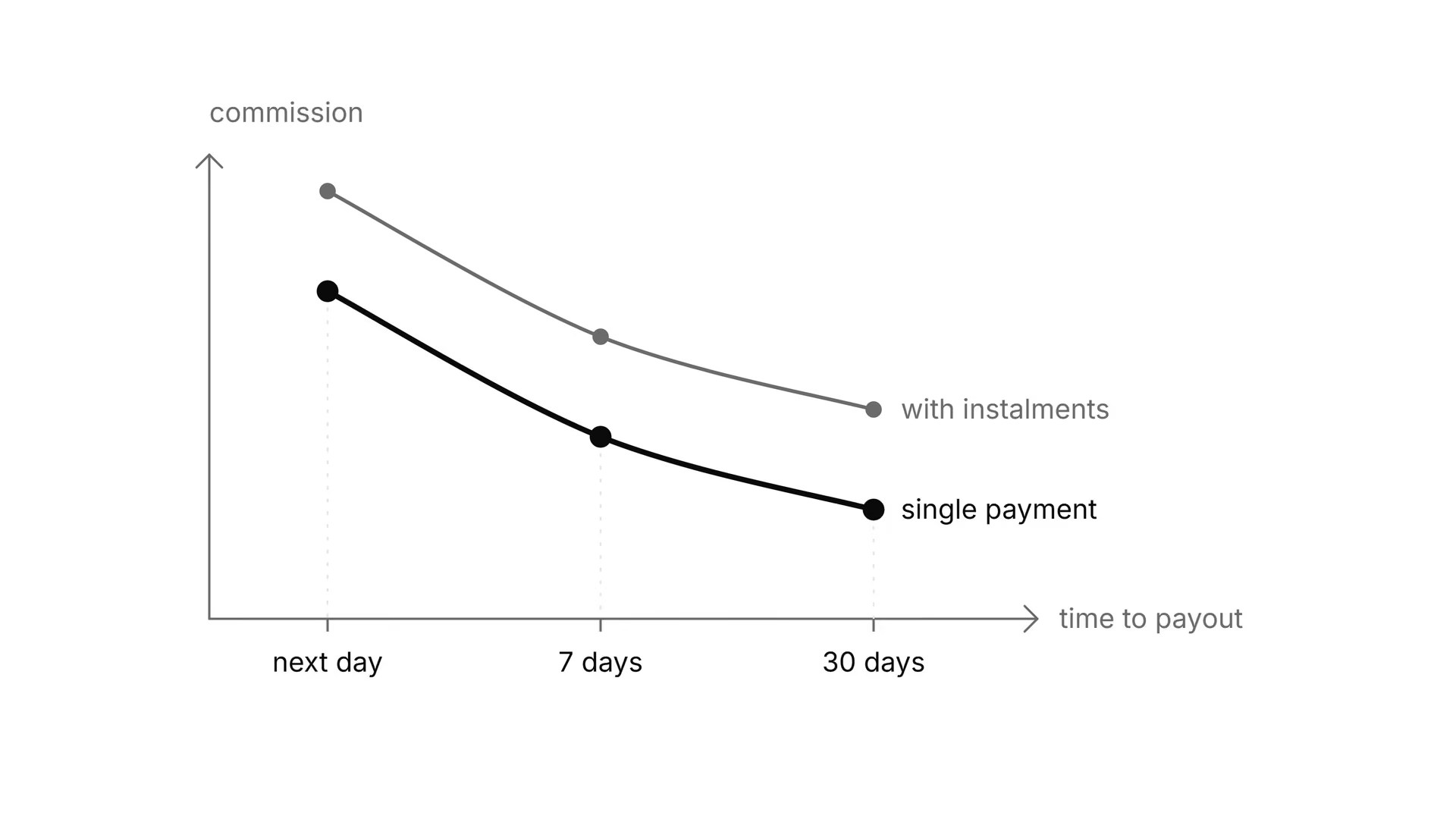
There are two ways to get a virtual POS (sanal POS), the service that takes card payments on your site: directly from your bank, or from a payment and electronic money institution licensed by the Central Bank of the Republic of Turkey (TCMB), such as PayTR or iyzico. On either route you will usually need at least a sole proprietorship and a tax certificate (vergi levhası), and your site has to show a distance sales contract, return terms and contact details. When you decide, do not look at the commission rate alone; the rate only means something together with how many days it takes for the money to reach your account. Next-day payout costs more, and waiting weeks costs less.
Should you go to a bank or to a payment institution?
Banks such as Garanti BBVA, İş Bankası and Akbank issue their own virtual POS. The strength of a bank POS is instalments on that bank's card programmes: Bonus at Garanti, Maximum at İş Bankası, Axess at Akbank. If your account is already at that bank, the process can get easier; İş Bankası says it asks for no documents from a business that has a commercial current account. Some banks also charge a fixed fee; İş Bankası's virtual POS page lists an annual fee of 13,999 TL (including BSMV, the banking and insurance transactions tax). What to check when connecting a bank POS to your site is shown, with this bank as the example, on our İş Bankası virtual POS integration page.
Payment institutions, for their part, say that one connection lets them accept the cards of many banks and offer instalments on those cards; PayTR and iyzico charge no setup fee and no fixed monthly fee. Check a payment institution's licence before working with it. Under Law No. 6493 these institutions get their licence to operate from the Central Bank, and the list of licensed institutions is published on TCMB's website. PayTR and iyzico appear on this list as "payment and electronic money institutions".
Do you need a company for a virtual POS?
For a virtual POS that connects to your site, mostly yes: at least a sole proprietorship and a tax certificate. If you have no company, what you can do is take payments by payment link. iyzico's help centre limits individual applications from people without a company to its link product, and Garanti BBVA's multi-bank solution Tami also allows payment by link only when you have no tax certificate.
The documents vary a little from one institution to the next, but the core is the same. PayTR asks a sole proprietorship for a tax certificate, an ID, a signature declaration and a document showing the bank account; from a company it also asks for the trade registry gazette, the partners' IDs and a signature circular. iyzico asks for the signature circular, the tax certificate and the partners' IDs, and verifies the IBAN during the application. At banks the list is similar: ID, tax certificate, signature circular or declaration, and for a company the trade registry gazette.
Which pages must your site have?
This is where applications most often get stuck. Payment institutions and banks look at the site and want it ready for use. iyzico gives the list outright: a privacy policy, a distance sales contract, delivery and return terms, and an about page. The home page has to show the trade name and the MERSİS number (the central registry number; for a sole tradesperson (esnaf), the name and tax number instead), the address, the KEP address (registered electronic mail), an email address and a phone number. The site must open over SSL, and the payment page must show card logos. The Interbank Card Center's (BKM) merchant guide gives the same list. Applying with a half-finished site, with no products uploaded yet, is usually a waste of time. In virtual POS integration work we check the site against this list with you before you apply. There is one official step as well: according to the Ministry of Trade, businesses that sell through their own site must register with the ministry's ecommerce registry (ETBİS) through e-Devlet before they start trading.
How much is the commission, and how many days until the money arrives?
It is different for everyone, because the rate is set by negotiation and by a few factors. PayTR quotes a rate starting from 2.19%, but that rate is for the model where money reaches your account seven days later; the real rate is given in a quote, depending on your sector, sales volume, basket value, instalments and card type. iyzico lists 4.29% + 0.25 TL per successful transaction for sales above 20,000 TL a month; on instalment sales the bank's instalment surcharge (vade farkı) comes on top. Banks involve the same trade-off: Akbank offers next-day payment or a model with funds blocked for 30 days, and İş Bankası offers next-business-day payout with commission or a blocked model without commission.
That is why comparing two quotes by rate alone misleads. Ask every quote the same questions: how many days until the money reaches my account, who pays the instalment surcharge, is there a fixed fee? Know one more thing: by law, the money waiting at a payment institution is not counted as a deposit, and the institution has to hold it in a separate safeguarding account. The shorter the waiting period, the shorter the time your money sits somewhere other than with you.
Is 3D Secure mandatory?
Setting it up is mandatory; using it on every transaction is not. Under the card regulation of the Banking Regulation and Supervision Agency (BDDK), merchants that sell by card on the internet must set up 3D Secure or an equivalent verification infrastructure; whether to make it mandatory on every transaction is left to the bank and the merchant. PayTR and iyzico also explain that they do not send transactions they consider low-risk to 3D verification. Switching it off has a price, though. According to the Interbank Card Center's guide, if an internet transaction was made without the cardholder's approval and no secure method such as 3D Secure was used, the loss stays with the merchant. So turning 3D off may reduce abandoned baskets, but it leaves you with the risk of every disputed payment.
Connecting the POS to the site is a separate job. We covered the step most often forgotten when connecting PayTR to WooCommerce in the WooCommerce and PayTR note, and where commission sits within a year's cost in the note on what an ecommerce site costs.