Does AI make things up, and what do you do to stop it?
Yes, AI hallucinates. Why it happens, and how grounding (RAG), permission to say I don't know, asking for quotes and verification keep it in check.

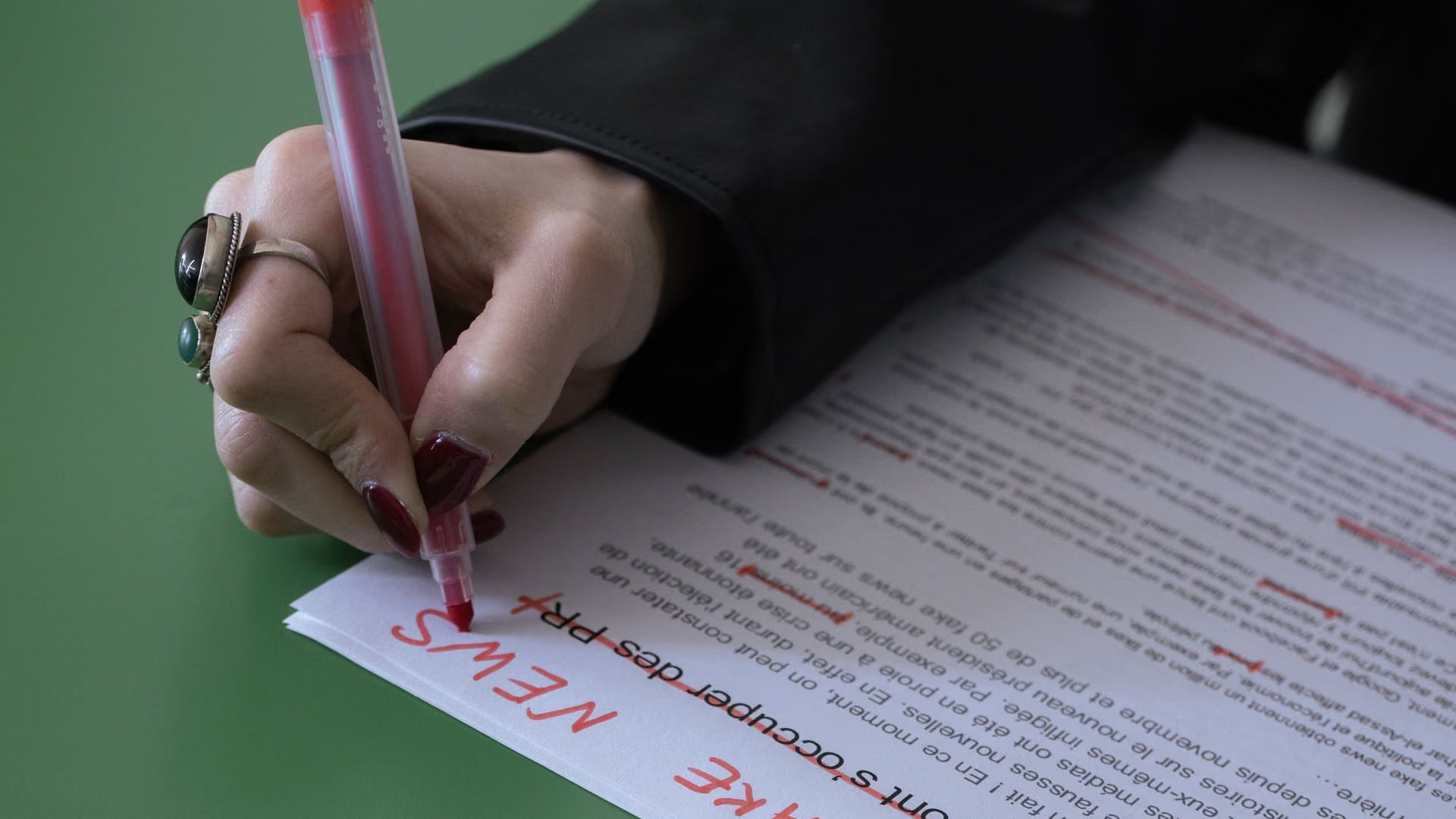
It does. We see it all the time. But it does not happen at random. When you ask a model for something it does not have, it fills the gap with a sentence that sounds plausible. The more you work with it, the better you learn which topics it tends to do this on. We do not leave AI much room to play. We move the work forward with our own expertise, and the model pulls out what is already in front of us and lays it out. Where the limits are drawn well, the inventing drops a lot. It never fully goes away, but it drops.
Why does AI make things up?
Because a language model does not look facts up. It predicts the next likely word. Google's guidance on generative AI content says this plainly. Models do not retrieve facts, they predict a likely sequence of words from their training data, so the output can contain inaccuracies, which are called hallucinations.
The trouble is that a wrong sentence arrives in the same voice as a right one. The model does not say it does not know, because it is built to answer. We covered what an assistant's invented answer can cost a business in our note on adding an AI assistant to your website. This note is about how to make the inventing smaller.
What does it mean to tell AI to search?
Think of a model as a piece of Python code. When you tell code to search, you also tell it where, a file path or a table name. You have to do the same with a model. If you say research our products, you are giving a command, but you have not said where to look. The model then looks into its own memory and builds a plausible answer from there.
So the answer should live in the documents you hand over, not in the model's memory. This is called RAG. The relevant pieces are first found in your knowledge base and then passed to the model together with the question. Google's cloud documentation calls it grounding. Tying the model's output to a verifiable source lowers the chance that it invents something, and it lets you show where an answer came from.
Which settings help reduce it?
Anthropic's guide to reducing hallucinations lists the basic methods. All four come down to how you write the command.
Anthropic describes permission to say I don't know as a method that can sharply reduce false information. Asking for quotes helps with long documents, because the model first pulls out the sentences as they are and bases its analysis only on those. In verification, the model goes back over its own answer and retracts any claim it cannot find support for.
You do not have to build this yourself. The citations feature in Anthropic's API returns the passages an answer relied on, word for word, from your document. That lets you show the source next to the answer. We build assistants that cite their source and say I don't know when they find no answer, as website AI assistant setup work.
Why does finding the right document matter so much?
If the document it reads is wrong, the model gives a wrong answer with the best intentions. OpenAI's guide to improving accuracy separates two failures. In the first, the wrong content is supplied and the model cannot find the answer. In the second, far too much irrelevant content is supplied, the real information drowns in it and that leads to hallucination. There is a third failure as well. The model gets the right content and does the wrong thing with it.
In practice this means keeping the knowledge base tidy. If an outdated FAQ page sits in the same folder as the current one, the model reads both. Our first job is to write down which documents the assistant draws from. Which folder, which table, which page.
Who does the checking?
It happens in two places. The first is automatic. As in Anthropic's guide, a second pass looks for each claim in the answer inside the documents. OpenAI's guide counts a verification step at the end of the system, one that tries to find hallucinations, among the steps that raise accuracy. Anthropic also suggests asking the same question several times and comparing the answers. If they disagree, there may be an invention at that point. The second place is a human check.
Automatic checks do not replace people. Anthropic's guide says these techniques reduce hallucinations but do not eliminate them, and that critical information should still be validated. Google likewise asks for AI-generated content to be reviewed by hand before it is published. On topics where a mistake is expensive, such as prices, refund rights or regulation, a person should have the last word.
Where should you start?
First list the questions you want the AI to answer and write down which document holds the answer to each. A question with no answer in any document is where the model will invent. Either add it to the documents or have the assistant say I don't know and hand the question to a person.